Serpro fire alarm guidance
Keep Your Fire Alarm Ready
A fire alarm maintenance checklist is not just paperwork. Used properly, it helps building owners, landlords, facilities teams and responsible persons spot faults early, keep records tidy and make sure the alarm system is ready to warn people quickly if a fire starts.
Why maintenance deserves structure
Serpro Group provides fire alarm systems, installation and ongoing maintenance for premises that need life-safety systems kept in working order. A checklist gives that maintenance a simple rhythm: what gets checked weekly, what needs a competent engineer, what needs recording and what should trigger a call for support.
This guide is designed as a practical support article. It does not replace a fire risk assessment, manufacturer instructions or professional maintenance advice, but it should help you organise the routine tasks that keep a system visible, testable and accountable.
Quick maintenance priorities
- Test the alarm routinely and record each result.
- Keep call points, detectors, sounders and panels accessible.
- Log faults, false alarms and corrective action.
- Arrange professional inspection and servicing.
- Review changes to the building, layout or occupancy.
The everyday fire alarm checklist
A useful checklist separates simple in-house checks from engineer-led maintenance. The responsible person for the premises should know who carries out each task, how often it happens and where the record is kept. For many commercial and shared residential environments, that record will sit alongside the fire risk assessment, fire logbook and any service documentation.
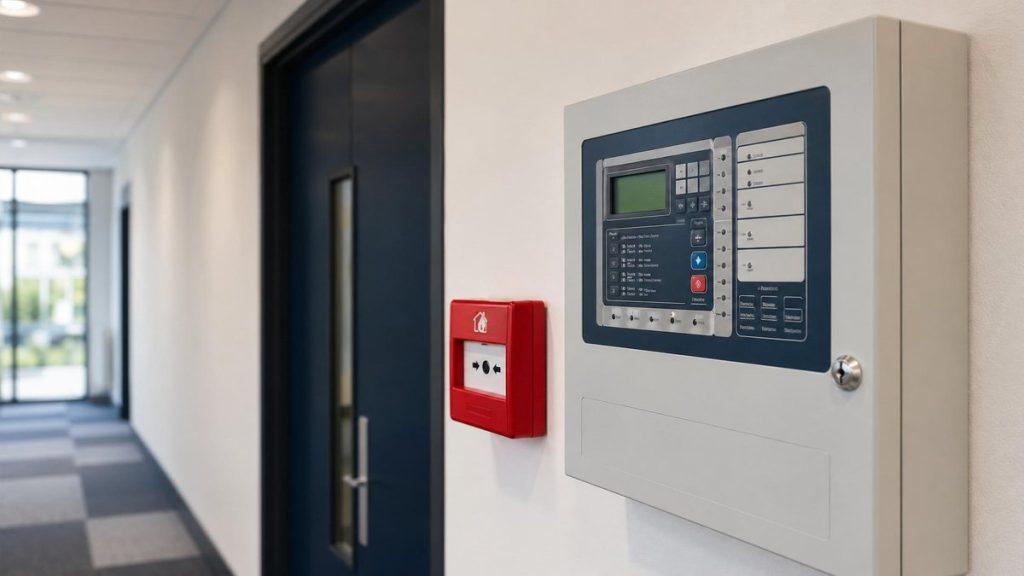
Control panel
Confirm: no active faults, warnings, disabled zones or unclear indicators.
Why: the panel is often the first sign that the system needs attention.
Manual call points
Confirm: visible, accessible and not blocked by stock, furniture or temporary works.
Why: people must be able to raise the alarm quickly in an emergency.
Detectors and sounders
Confirm: devices remain uncovered, undamaged and correctly positioned for the space.
Why: obstructions, damage or layout changes can reduce system effectiveness.
Alarm test
Confirm: alarm activation is heard clearly in the intended areas and resets correctly.
Why: routine testing proves the warning function is not just assumed.
Records
Confirm: tests, faults, false alarms, maintenance visits and actions are logged.
Why: good records make trends and unresolved issues easier to see.
If one of these checks fails, avoid simply resetting the panel and moving on. Record what happened, isolate the cause if it is obvious and safe to do so, and arrange competent support where the issue could affect detection, warning, zoning or system reliability.
Weekly checks for responsible persons
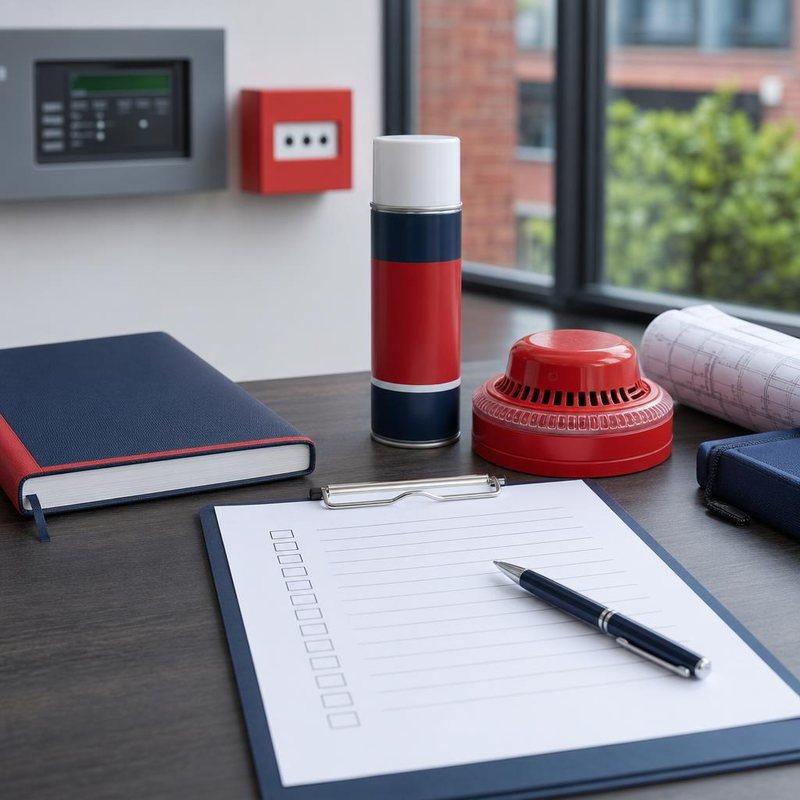
A weekly user test is one of the simplest ways to keep the system on the radar. The aim is not to test every detector in the building each week; it is to confirm that the alarm can be triggered, sounds as expected and returns to normal afterwards. Use a different manual call point on a rotation so different parts of the system are checked over time.
If the alarm is linked to monitoring, building management systems, lifts, door releases or other connected systems, make sure the right parties know the test is planned and that the process matches the site’s agreed procedure. Serpro’s broader fire and security background means maintenance should be considered alongside the way the rest of the building operates, not as an isolated box on the wall.
Monthly and visual checks
Between service visits, visual checks are about spotting the obvious changes that stop a system doing its job. Building layouts change, stock is moved, refurbishments happen, tenants alter rooms and dust can build up. These changes can affect coverage, audibility and access even when the panel shows no fault.
- Check that detectors have not been painted over, covered, removed or knocked out of position.
- Make sure manual call points are visible and reachable on escape routes.
- Confirm sounders, beacons and signage have not been hidden by storage or new partitions.
- Look for damaged cabling, cracked units, water ingress, dust build-up or temporary covers left after works.
- Ask whether any room use, occupancy pattern or escape route has changed since the system was last reviewed.
These checks are not a substitute for professional servicing, but they help you catch issues that an engineer might otherwise only see at the next visit. When in doubt, record the change and ask for advice.
Professional servicing checks
Fire alarm systems need competent inspection and maintenance. An engineer-led visit can check areas that routine user testing cannot: detector condition, device operation, battery status, panel programming, zone information, false alarm history, wiring condition and whether the system still reflects how the building is used.
Serpro’s fire alarm service page explains that the team supports fire alarm installation, maintenance, system testing, fire risk assessment support and emergency lighting systems. For a building manager, the useful question is: “Does our maintenance record prove that the system is being looked after, and are the actions from each visit being closed?”
If your site has repeat false alarms, unexplained panel faults, changes to layout or areas where people say the alarm is difficult to hear, those should be raised during the service visit rather than left as informal comments.
Record keeping: what to log
A fire alarm logbook should make the history of the system easy to understand. If a fault is recurring, if the same detector causes repeated false alarms or if a test is missed for several weeks, the record should make that obvious. Good records also help when maintenance responsibility moves between staff members or contractors.
When to get help quickly
Some issues should not wait for the next planned service visit. If the system will not reset, a zone is disabled, the panel shows a persistent fault, devices have been damaged, building works have affected detection coverage, or staff are unsure whether the alarm is sounding throughout the building, arrange professional support.
The same applies if you are planning a refurbishment, changing how a space is used or taking on responsibility for a building with incomplete records. In those situations, a review of the fire alarm system can sit alongside broader fire-safety planning. Serpro has already published a related guide on fire alarm compliance with UK regulations, which is a useful next read if you are reviewing your responsibilities.
How this supports a safer building
A maintained fire alarm system does three things well: it detects a problem as early as practical, warns people clearly and gives the responsible person confidence that faults are not being ignored. The checklist is the bridge between those aims and day-to-day building management.
For organisations using more than one life-safety or security system, it is also worth looking at how systems interact. Access-controlled doors, CCTV, intruder alarms, emergency lighting and alarm response processes can all shape what happens during an incident. Serpro’s wider fire and security services positioning is useful here because building safety rarely sits in one neat box.
A good maintenance routine should feel boring in the best possible way: regular, documented, followed up and easy to explain. When that routine is in place, urgent problems stand out quickly instead of being hidden in memory, email threads or assumptions.
Need fire alarm maintenance advice?
If your fire alarm records are incomplete, your system is showing faults, or you want a clearer maintenance plan for your premises, Serpro Group can help you review the next step.