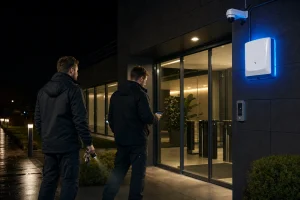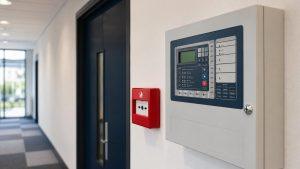

An intruder alarm is there to do more than make noise. For a commercial premises, the real question is what happens next when the system activates.
Intruder alarm monitoring helps answer that question. It connects the alarm to a managed process, so alerts can be checked, escalated and acted on instead of relying only on someone nearby hearing a siren.
What intruder alarm monitoring actually means
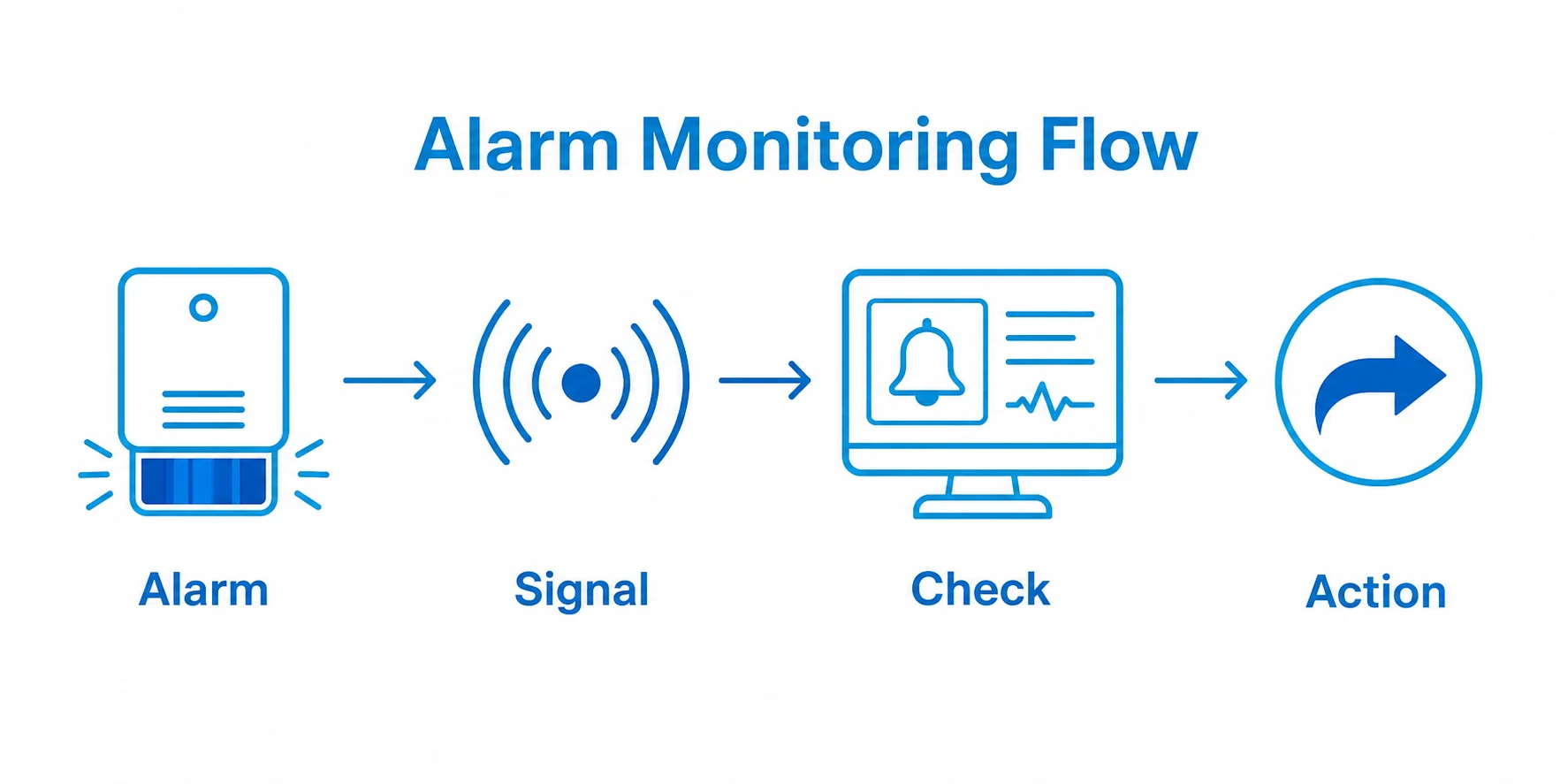
Intruder alarm monitoring is the link between your alarm system and a response process. When a detector, contact or panic device triggers the alarm, the system sends a signal to a monitoring centre or nominated response pathway. From there, trained operators or agreed contacts follow a set procedure.
That procedure can include checking the type of signal, reviewing which area of the building has activated, contacting nominated keyholders and escalating the incident where appropriate. The exact setup depends on the premises, the risk profile and the chosen service.
This matters because commercial buildings are often empty outside working hours. A siren may deter an intruder, but it does not guarantee that the right person knows about the incident. Monitoring helps turn an alarm activation into a managed event.
For businesses reviewing their wider security setup, Serpro Group provides intruder alarm systems for commercial premises that can be designed around the way the building is used.
Why a siren alone is not always enough
A local alarm can still play an important role. It creates an immediate audible warning, draws attention to the premises and may encourage an intruder to leave quickly. The limitation is that it depends on someone hearing it, recognising it and taking action.
In practice, many activations happen when staff are away from site, nearby units are closed or the people who hear the alarm do not know who to call. False alarms can also make people less likely to react with urgency. Monitoring adds a clearer route from activation to action.
It also supports better decision making. If a monitoring team receives a signal from a protected area, they can follow the agreed escalation plan rather than leaving the incident to chance. That might mean contacting a manager, dispatching a keyholding partner or using additional verification where the system supports it.
The aim is not to make security complicated. It is to make the next step clear before an incident happens.
How monitored alarms support escalation and response
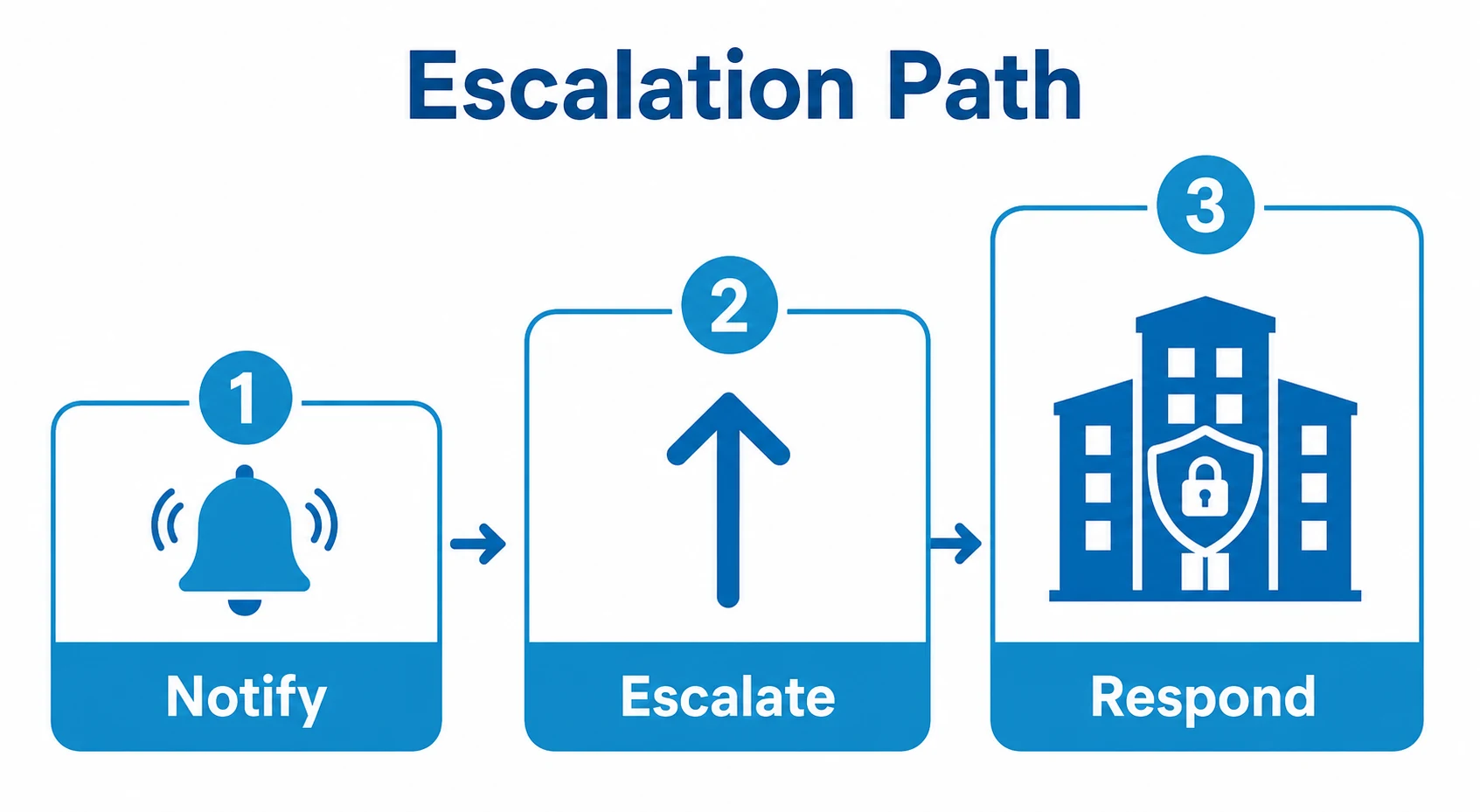
The main benefit of monitoring is structure. A good alarm response process removes uncertainty from a stressful moment. Instead of asking staff to decide what to do at short notice, the process is agreed in advance.
A typical escalation plan may cover:
- Who should be contacted first when the alarm activates.
- What information should be passed on, such as the zone or device that triggered.
- When the incident should be escalated to another contact.
- Whether a professional keyholder should attend the premises.
- How repeat activations or fault signals should be handled.
This is especially useful for businesses with lone workers, multiple managers or premises that are difficult to attend quickly. It helps avoid situations where one person feels pressured to visit the site alone without enough information.
Many organisations choose to pair monitoring with key holding alarm response, so alarm activations can be attended by trained responders rather than relying solely on staff availability.
The role of verification in reducing uncertainty
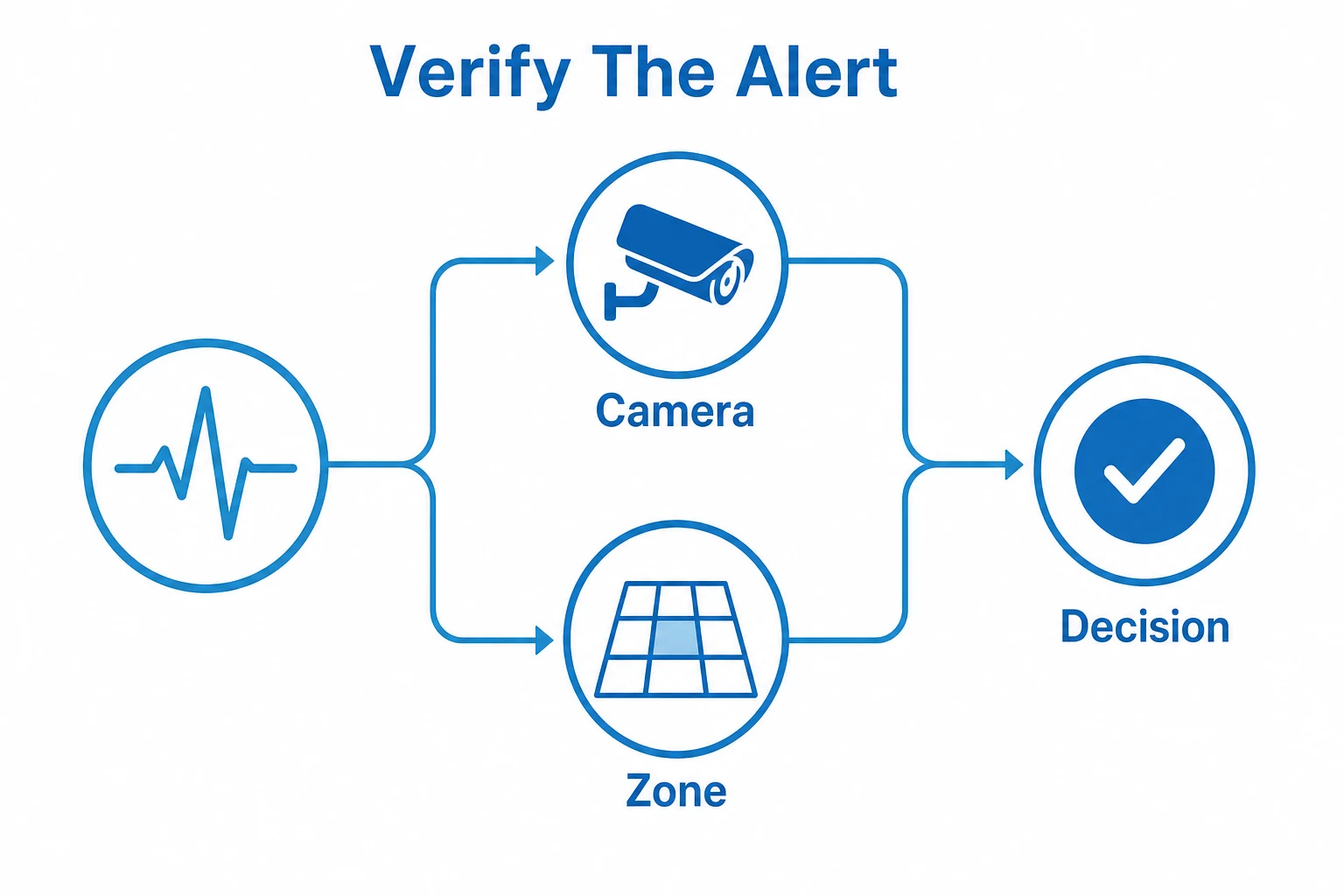
Not every alarm activation means there is an intruder. A door may not have been secured properly, a sensor may pick up movement from an unexpected source or a user may make an entry error. Monitoring does not remove the need for good system design, but it can help the business handle activations more consistently.
Verification can take different forms depending on the equipment and service. Some systems provide zone information, showing which part of the premises activated. Others may be designed alongside CCTV, access control or other security measures to give a clearer picture of what has happened.
Where CCTV is part of the security strategy, it can support investigation and help businesses understand whether an alarm was caused by a genuine threat, a user issue or an environmental factor. Serpro Group also provides CCTV services for commercial security where visual coverage is needed alongside alarm protection.
The key point is that monitoring creates a more informed response. It gives nominated people better context and helps avoid guesswork when time matters.
What businesses should decide before choosing monitoring
The most useful monitored alarm setup starts with practical questions about the building and the people who use it. A warehouse, office, care setting, retail unit and shared commercial site can all have different needs.
Before choosing a monitoring arrangement, it is worth considering:
- When the premises is usually occupied and when it is empty.
- Which areas need detection, such as entrances, offices, stores or restricted rooms.
- Who is responsible for responding to an alarm activation.
- Whether staff should ever attend site alone.
- How the alarm system should work with doors, access control and CCTV.
- What should happen if an activation occurs during opening hours.
These decisions help shape the alarm design, not just the monitoring contract. Detection should be placed where it supports real risks, and users should understand how to set, unset and report issues with the system.
It is also sensible to think about other life safety systems in the building. Intruder alarms, access control, CCTV and fire alarm systems each have a different purpose, but they all benefit from clear procedures and regular attention.
How monitoring supports better business continuity
Security is not only about stopping crime. It is also about reducing disruption. If an alarm activates overnight and nobody knows until the next morning, the business may lose valuable time dealing with damage, access issues or uncertainty over what happened.
Monitoring helps shorten that gap. The right people can be alerted sooner, the agreed response can begin and records of the activation can support follow up. That may help managers decide whether to inspect the premises, review access permissions, check CCTV or arrange maintenance.
For growing businesses, monitoring can also bring consistency across changing teams and routines. As staff change, opening hours shift or premises are reconfigured, the alarm process can be reviewed so it still matches the way the site operates.
The strongest systems are designed around real use. They are simple for authorised users, clear in an activation and supported by a response plan that everyone understands.
- Intruder alarm monitoring turns an alarm activation into a managed alert with agreed next steps.
- A siren can deter intruders, but monitoring helps make sure the right people are notified.
- Escalation plans reduce uncertainty for staff, managers and nominated keyholders.
- Monitoring works best when it is designed around the premises, occupancy patterns and wider security setup.
- Regular reviews help keep the alarm response process aligned with how the business operates.
Frequently asked questions
What is an intruder alarm monitoring service?
It is a service that receives signals from an intruder alarm and follows an agreed response process. This may include contacting nominated people, escalating the alert and supporting attendance arrangements depending on the setup.
Does a monitored alarm still sound inside or outside the premises?
In many cases, yes. Monitoring can work alongside audible alarm devices. The siren provides an immediate warning, while monitoring helps make sure the activation is also reported through the agreed route.
Who responds when a monitored alarm activates?
That depends on the response plan. It may be a nominated manager, a list of keyholders or a professional alarm response provider. The important point is that this should be agreed before an activation happens.
Can alarm monitoring be added to an existing system?
Sometimes it can, depending on the age, condition and compatibility of the existing equipment. A professional assessment can confirm whether the current system is suitable or whether upgrades would give a more reliable result.
Planning a clearer alarm response?
Serpro Group can help you review how your intruder alarm should detect, alert and escalate when your premises needs protection.